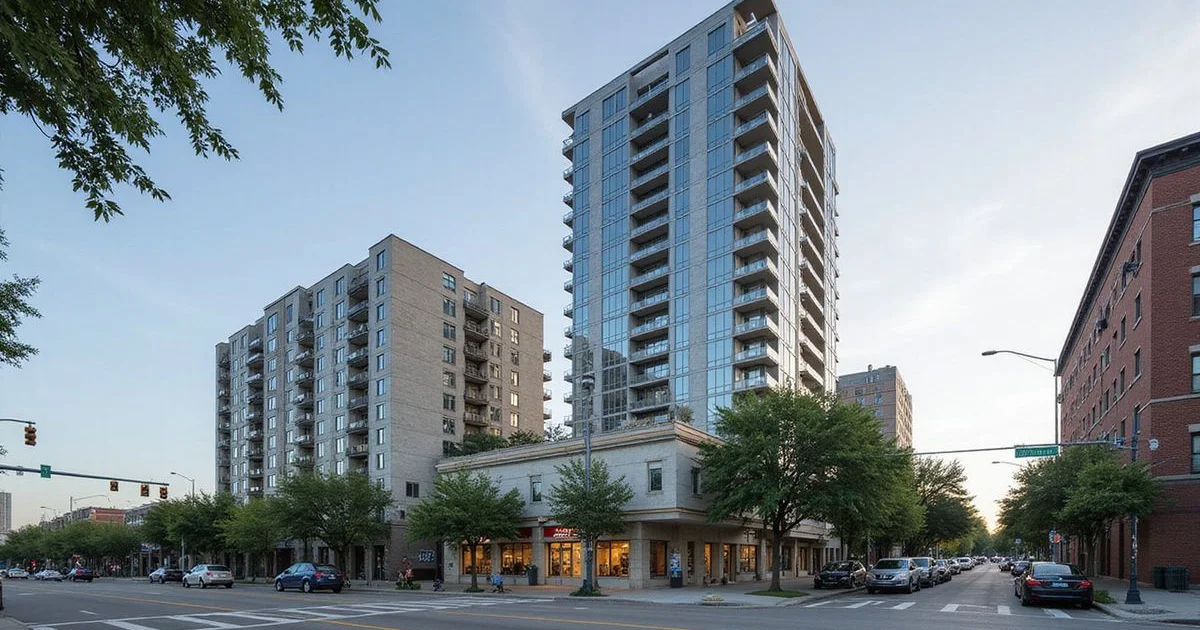
How does building type change the monthly bill?
You know how the advertised rate for a property almost never matches the final monthly invoice. Building type shifts this financial equation immediately by changing the required parking, amenity fees, and utility setups.
Those specific structural line items can completely flip which property actually costs less.
As a professional service team handling relocations, we notice business owners and downsizing homeowners often miss these hidden variables. For example, the premium amenities found on our new high-rise apartments page drastically change the baseline budget.
We will break down exactly where these extra charges hide and show you a simple method to calculate the true cost.
These terms describe the architectural structures, not the people living inside them.
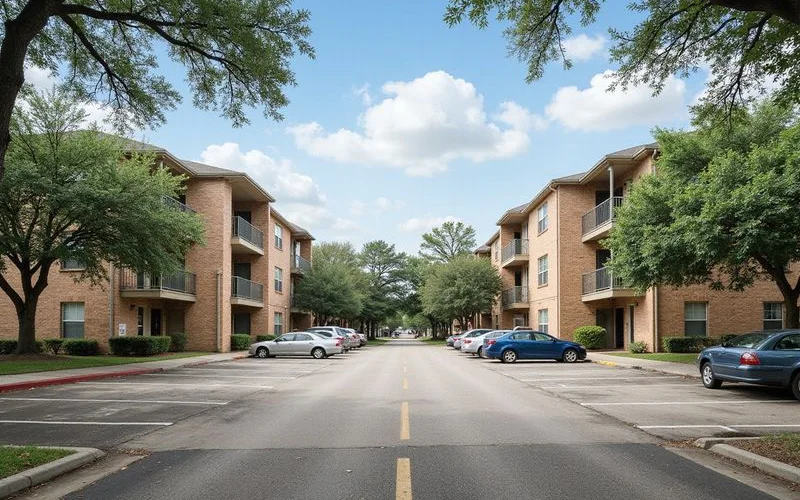
The three types at a glance
A quick look at the physical layout tells you exactly what kind of bills to expect. High-density structures centralize services but charge a premium for that centralized convenience. Spread-out properties put more responsibility directly on the resident.
We created this matrix to help you categorize properties quickly. The columns highlight the most common configurations across major US markets.
| High-rise | Mid-rise | Garden-style | |
|---|---|---|---|
| Height | Usually 10+ stories | Usually 4 to 7 stories | Usually 2 to 4 stories |
| Parking | Structured garage, often per space | Wrap or podium garage, sometimes per space | Surface lot; detached garages extra |
| Hallways | Interior, elevators | Interior, elevators | Breezeways or outdoor stairs |
| Common fees | Amenity fee, valet trash, packages | Valet trash, tech | Valet trash, pest |
| Electric | Sometimes included | Usually your plan | Usually your plan |
| Where in Houston | Inside the Loop, Uptown, near the TMC | Inner loop, Heights, near I-10 | Suburbs: Katy, Cypress, Spring |
Where the bill differs
The final invoice fluctuates based on how a property handles vehicle storage, shared services, and climate control. A garden community might include surface parking and standard trash pickup in the base rate. A high-rise will almost certainly itemize every single convenience.
We always tell clients to look past the initial marketing numbers. The actual cost gap between two properties hides in the fine print.
Parking Structures and Fees
This is often the largest financial gap for multi-vehicle households. A sprawling garden community usually provides a free surface space for your car. A high-density tower typically charges a premium per space in a secure, structured garage. Two vehicles in a downtown high-rise can easily add $150 to $250 to your monthly budget. A mid-rise might offer a mix, utilizing a wrap garage with optional reserved spots for around $50.
Mandatory Amenity Charges
Required monthly charges vary wildly by property style and location. At 11 market-rate board buildings, required fees ran $77.62 to $158.06 a month, median $98 (Oct 25, 2026). Towers usually sit at the higher end once a mandatory amenity fee is added to cover concierge services and smart-home tech packages. Our guide on required fees explains each specific charge in detail.
Utility Billing and Climate Control
Electric and water costs change significantly based on the building’s infrastructure. Five of 140 board buildings included or billed electric on Oct 25, 2026. When a property includes it, the marketing card says so, and you do not need to add a separate electric line to your spreadsheet. Top-floor units in high-rises often face higher cooling costs during the summer because heat naturally rises. First-floor garden units usually require far less energy to cool down.
Compare true monthly, not rent
We add required fees, parking, electric and water to net effective rent for every building type. That is the exact number you need to compare.
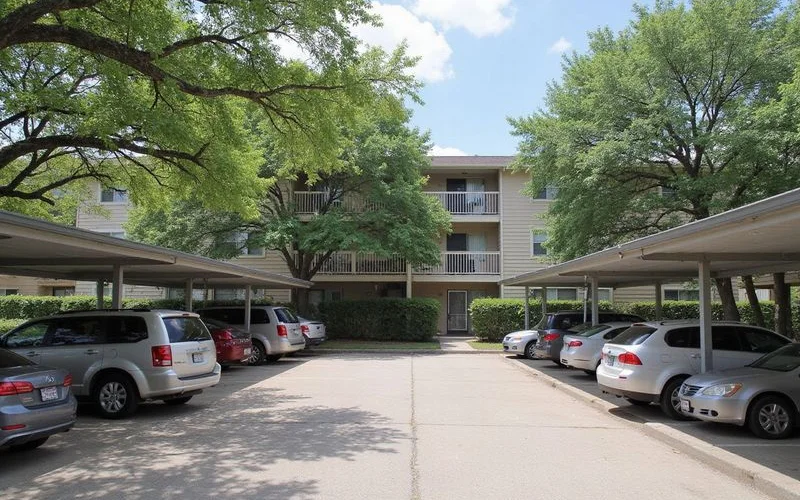
What else changes with building type
The daily experience shifts dramatically depending on your chosen architecture and shared infrastructure. The physical layout impacts how you handle emergencies, move furniture, and manage noise.
We recommend evaluating these practical factors before signing a lease or a corporate housing contract. A cheaper property might cost you significant time and comfort later. The major lifestyle differences include several key areas.
Handling Power Outages
Infrastructure determines your comfort during a grid failure. In a tower, a severe outage can mean losing elevator access and suffering from low water pressure. Many modern high-rises utilize massive Generac systems, but these often only power emergency lighting and critical elevators rather than individual units. Garden communities leave you fully in charge of your own backup power. Renters in ground-level units often rely on portable lithium power stations, like the popular Anker Solix F2000, to keep small appliances running. Our guide on backup power lists exactly what to ask property managers.
Moving Logistics and Fees
Access changes how much a moving company will charge you for labor. High-rise and mid-rise moves usually require a reserved freight elevator and a strict time window. You might even have to pay a non-refundable elevator deposit upfront. Garden buildings allow movers to park a truck right near your front door. This direct access significantly cuts down on hourly labor costs.
Privacy, Noise, and Pets
Structural materials dictate the acoustics of your home. Concrete towers block lateral noise incredibly well, so you rarely hear the person next door. Garden buildings usually feature wood-frame construction, meaning you share floors and walls differently and might hear heavy footsteps above you. For pet owners, garden buildings often provide ground-floor units with quick, easy outdoor access. Taking a dog down twenty flights of stairs multiple times a day is a major time commitment.
A simple way to choose
Finding the right fit requires mapping your business or personal lifestyle to a specific building class. A relocating executive requires different daily conveniences than a homeowner waiting for a new construction to finish.
Our team uses a straightforward evaluation method to match clients with the right property. You can follow these four steps to eliminate bad options quickly.
- Decide your absolute must-haves, such as a secure garage, a ground-floor entrance, or a skyline view.
- Build the true monthly cost for one building of each type you would consider.
- Add year two to your spreadsheet, since renewal is always priced from base rent rather than the promotional rate.
- Tour the two closest options on cost to feel the physical differences.
A hypothetical side-by-side
The numbers below demonstrate how a lower base rent can vanish once standard living expenses are added. A garden unit looks drastically cheaper upfront, but the gap narrows when you factor in bundled utilities and parking fees.
We built this table to show the financial mechanics in action. The final totals reveal the true cost of each housing style before factoring in personal utilities like internet.
| Line | High-rise | Mid-rise | Garden-style |
|---|---|---|---|
| Net effective rent | $1,700 | $1,550 | $1,400 |
| Required fees | $150 | $110 | $85 |
| Parking (one space) | $100 | $50 | $0 |
| Electric | Included | $110 | $120 |
| True monthly before water | $1,950 | $1,820 | $1,605 |
These are illustrative numbers, not binding quotes. They show why parking and amenity fees matter just as much as the base rate. You can also see how included electric bills can narrow the final gap. Our real comparisons use each building’s confirmed, line-by-item fee sheet.
How do we help?
We run these exact calculations for you so you can make a confident, data-driven decision. Just send your move date, your vehicle storage needs, and your maximum all-in budget to our office.
Your dedicated agent will build the complete, transparent bill for each building type directly from your specific criteria.
We then line up tours for the best options, scheduling them all on the exact same day during business hours.