
Do new Houston buildings accept housing vouchers?
Our team receives frequent questions about whether pfc apartments accept vouchers houston residents hold. Locating housing choice voucher new apartments requires specific market knowledge. Landlord acceptance in Texas is completely voluntary under state law for most standard developments.
We track these financing details because they dictate whether a building has to say yes. Tax-exempt structures create an entirely different set of rules for property managers.
We list these details on property cards where confirmed, and you can also check our income-restricted new apartments page. Let’s look at the data and explore a few practical ways to respond to this market.
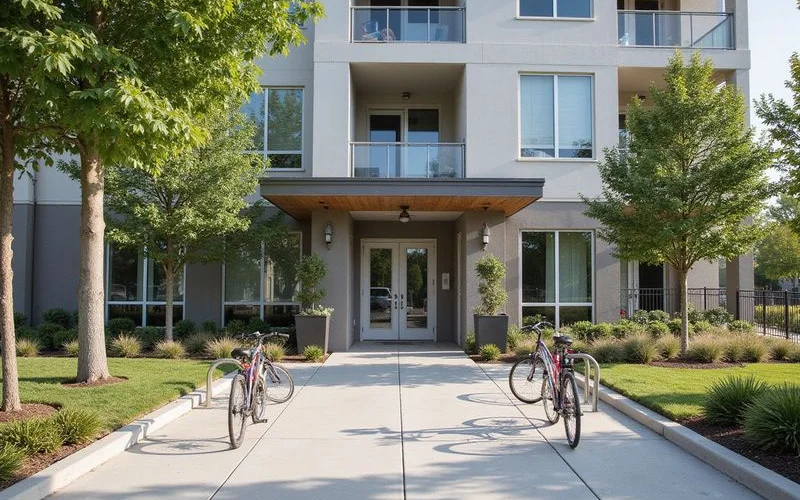
Which buildings must accept vouchers?
Buildings financed through a Public Facility Corporation (PFC) or a Housing Finance Corporation (HFC) must accept vouchers under HB 2071 and HB 21 (Texas Local Government Code §394.9026). This 2023 legislation directly tied hb 2071 vouchers to tax exemptions, forcing new PFC developments to reserve at least 10% of their units for households earning 60% or less of the Area Median Income. We see these partnerships give a building a 100% property tax exemption in exchange for strict rules, making voucher acceptance a non-negotiable requirement.
Our state laws protect landlord choice in standard properties. Under §250.007, Texas cities cannot require private landlords to accept vouchers. A market-rate building without PFC, HFC, or Low-Income Housing Tax Credit (LIHTC) financing can simply say yes or no based on their own policies.
We verify the financing structure of a property before making any assumptions about their voucher policies. The table below breaks down the legal requirements by building type.
| Building type | Must accept vouchers? | Source |
|---|---|---|
| PFC partnership building | Yes | HB 2071; HB 21, §394.9026 |
| HFC partnership building | Yes | HB 2071; HB 21, §394.9026 |
| LIHTC building | Generally yes, under federal rules for those units | Program rules |
| Other market-rate building | May choose | §250.007 |
What changed in 2025?
The Houston Housing Authority (HHA) halted new PFC deals in April 2025 under the direction of CEO Jamie Bryant. This pause occurred because internal reviews showed the lucrative tax breaks were not providing enough proportional rent relief for low-income residents.
Our tracking shows that existing PFC buildings keep their agreements and current voucher rules. Property owners who already secured these deals must still comply with their original affordability mandates.
We actively check the financing structure of every new building because developers are pivoting to alternative tax-exempt models. The landscape shifts quickly, and reliable data prevents wasted application fees.
We label facts, not people
Voucher acceptance is a fact about a building. We list it where confirmed, and we never push or hide buildings based on who can rent there.
Payment standards and Fair Market Rent
A voucher pays up to a payment standard, set by the local housing authority. Housing Alliance HTX previously listed a 1-bedroom payment standard of $1,362 at the top tiers, or $1,135 for lower tiers.
We mark these [verify] until we confirm the current figure and its effective date directly with the agency. Payment limits dictate your buying power, so accuracy matters. HUD’s baseline Fair Market Rent for FY2027 is $1,261 for a standard 1-bedroom unit, but the Houston market relies on Small Area FMRs (SAFMRs) that adjust this limit based on the specific ZIP code.
Our review of the October 2026 HUD data highlights how these limits change by neighborhood:
- Broad Metro Area: Baseline FMR sits at $1,261.
- ZIP 77056 (Uptown): The 1-bedroom limit jumps to $1,860.
- ZIP 77019 (River Oaks): The 1-bedroom limit hits $1,900.
We advise comparing the property’s gross rent against the specific SAFMR for its ZIP code. Your housing authority normally sets their final payment standard between 90% and 110% of that published HUD figure.

How to approach a new building with a voucher
Approaching a new development requires a clear strategy to avoid wasting money on non-refundable application fees. Property managers receive dozens of inquiries daily, so asking precise questions gets you faster answers.
We recommend following this exact sequence when calling a leasing office:
- Ask whether the building is a PFC, HFC, or LIHTC property.
- If not, ask whether it accepts vouchers by choice.
- Verify if their income requirement (usually 2.5x or 3x) applies only to your portion of the rent, rather than the total gross rent.
- Compare the unit’s rent with your payment standard.
- Ask about their previous experience with housing authority inspection timelines.
Our guide on income limits covers AMI limits for restricted units. These limits dictate whether you qualify for the specific set-aside apartments within a PFC building.
We also maintain a dedicated fair housing page that explains how our team labels buildings. Clear communication up front prevents surprises during the underwriting process.
Inspections and timing
Voucher units usually need to pass a housing authority inspection before move-in. The Houston Housing Authority enforces federal Housing Quality Standards (HQS) to verify the property is safe and habitable. We see that new construction often passes on the first try because the physical systems are brand new, meaning the real delay comes from the administrative scheduling queue.
Our clients typically wait 7 to 15 days for an initial inspection after submitting the Request for Tenancy Approval (RFTA). You must plan your move date with that administrative timeline in mind.
We advise applicants to verify three critical utility steps before the inspector arrives:
- Ensure the electricity is fully activated in the unit.
- Confirm water pressure and plumbing fixtures are operational.
- Check that gas services (if applicable) are turned on.
An inspector will automatically fail a unit if any of these utilities are inactive.
Rent reasonableness
Housing authorities also check that the unit’s rent is reasonable compared with similar unassisted units nearby. The agency uses databases like AffordableHousing.com to pull market comparables from the immediate neighborhood.
We notice this check can become a major hurdle at new buildings with high base rents. A brand-new mid-rise with luxury amenities might fail the reasonableness test if the surrounding blocks only feature older, standard apartments.
Our team recommends asking the leasing staff whether their specific floor plans have passed reasonableness reviews recently. A property that just passed a review for another voucher holder is highly likely to pass yours.
How do we help?
Working through the various tax exemptions and property rules takes time and energy. A simple mistake can cost you a non-refundable $100 application fee when searching for pfc apartments accept vouchers houston. We protect your budget by doing the heavy lifting for you.
Send us your voucher size, target move date, and the specific areas you want to live in. Our staff will confirm the financing type and voucher acceptance at each building. The team then compares the asking rents directly with your calculated payment standard.
We share all of this verified information with you on the same day during business hours. Reach out to us today to start your targeted search.