
A budget-first approach means starting with the maximum monthly number your finances can handle and working backward. We consider this the most critical strategy in learning how to budget for a new apartment all in cost.
Renters frequently sign leases based on an advertised base rent, only to be surprised by the true cost of renting a few weeks later.
According to Zillow’s 2026 Rental Market Report, the typical renter now spends 26.4% of their income on rent. This leaves very little room for unexpected monthly fees.
We find this specific method is the fastest way to build a shortlist of new apartments in Houston you will actually be comfortable paying for.
Rent is simply the first line item on your ledger. This guarantees every property is compared fairly, because the bill is built in a specific order.
Let’s look at the data, what it is actually telling us, and explore exactly how to establish this limit.

Step 1: Write down your all-in monthly number
Start by picking the absolute maximum amount you can pay each month for housing. This figure must include utilities, parking, and your commute costs.
We recommend writing this initial number down immediately. You then need to write down a second target number for year two.
The Golden Rule of Renewals Your renewal will almost always start from the base rate, not the discounted first-year special.
If you feel unsure where to start, many apartment communities test income at 2.5 to 3 times the rent amount. That is strictly an approval rule, not a personal comfort rule.
Our data shows your actual comfort number should likely be lower. The 3x income rule was established years ago when utility costs and mandatory fees were a much smaller portion of total housing expenses.
Today, those extra fees eat up a larger share of your paycheck. Consider these utility variations when setting your cap:
- Summer cooling spikes: Texas residents routinely see electricity bills jump to $180 to $280 in July and August.
- National electric averages: In most temperate areas, the average monthly electric bill hovers between $60 and $100.
- Water and sewer: Expect to pay $45 to $75 monthly, depending on your building’s billing structure.
We advise leaving a slight buffer below your maximum number to absorb these seasonal utility swings.
Step 2: Build the true monthly for each building
The apartment budget calculator method requires mapping out every single line item. This prevents hidden costs from ruining your financial plan.
We use a specific order to build the true monthly expense for every property.
| Line | What it is | Where it comes from |
|---|---|---|
| Net effective rent | Rent after the special, averaged over the term | (base x term minus free rent) / term |
| Required fees | Valet trash, packages, resident benefit package | The written fee sheet |
| Electric | Your plan or the utility’s rate | Provider by address |
| Water | City or district, billed by the property | Last year’s average |
| Parking | Garage or space fees | The fee sheet |
| Tolls | If your commute uses toll roads | Your route |
At 11 board buildings, required fees ran $77.62 to $158.06 a month, with a median of $98 (Oct 25, 2026). Our guide on required fees shows what each one covers.
These extra charges are exactly why calculating the true cost of renting matters. Property managers frequently mandate these services, meaning you cannot opt out.
We track several common mandatory fees across the country.
Common Mandatory Apartment Fees
Property management companies bundle various services into your lease. You must account for these averages in your budget:
- Valet Trash: Most properties pay vendors $8 to $15 per door, but they charge residents $25 to $35 monthly for this doorstep pickup service.
- Resident Benefit Packages: These bundles often cost $30 to $60 per month and include features like air filter delivery or credit reporting.
- Pest Control: Expect a mandatory fee of $5 to $15 each month, regardless of whether you request the service.
- Pet Rent: If you have animals, property managers typically charge $25 to $50 per month, per pet, entirely separate from your initial pet deposit.
A quick calibration
8 weeks free on a $1,400 apartment is about $2,585. Spread over 12 months, you pay about $1,185. Add our $98 median fees and it’s $1,283, and year two starts at $1,498 if the base holds.
Step 3: Check year two
Planning for your second year is just as crucial as securing a good deal for your first. Your move-in concession expires, so your new rate is calculated as your base rent multiplied by the renewal increase, plus your mandatory fees.
We strongly suggest testing this formula at both a 0% and a 3.5% increase.
The Move-In vs. Renewal Gap New move-in rent prices have flattened recently, dropping 0.4% year-over-year in Apartment List’s October 2026 National Rent Report. Renewal rates tell a completely different story.
Property operators know moving is expensive and frustrating. They capitalize on this by keeping renewal lease rent growth steady.
You should expect the following market realities at renewal time:
- National renewal average: Operators push for a 3.5% to 4% increase on existing leases.
- Base rent resets: Your increase is calculated on the gross rent, ignoring your previous free-month specials.
- Fee inflation: Required services like valet trash and pest control rarely decrease in price over time.
We want you to be prepared for that exact scenario. If that projected year-two number sits far above your comfort zone, the building might still work for a short-term stay, but you must simply plan for a move.
Step 4: Use the area ranges to pick where to look
Regional pricing data gives you a clear boundary of what is possible in different neighborhoods. Each area page shows a feed-calculated “studio/1BR after special, from” price alongside the typical special.
We advise using these baseline numbers to rule entire areas in or out before you ever look at single buildings. The live value updates every morning to reflect changing market conditions.
Market Shift Alert Zillow’s 2026 data shows out-of-town renters are increasingly targeting affordable metros, causing rapid shifts in localized demand.
Neighborhood pricing fluctuates heavily based on the following factors:
- New construction supply: Areas with multiple new buildings offer the most aggressive rent concessions.
- Out-of-state demand: High inbound migration can drive up base prices quickly.
- Seasonal moving trends: Rents generally peak in the summer and dip slightly in the late fall.
Our platform tracks these shifts so you can focus your search on neighborhoods that actually fit your long-term financial goals.
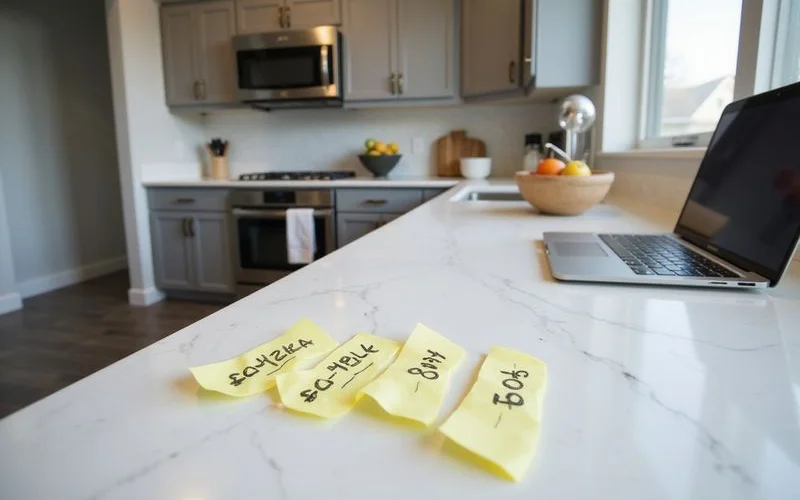
Step 5: Run the numbers yourself
Concessions change rapidly, so doing your own math is the only way to protect your budget. Zillow’s July 2026 Rent Report noted that rent concessions are up from year-ago levels in 43 of the 50 largest metropolitan areas.
Our true monthly calculator uses the exact same formulas as the board.
You simply enter the following data points:
- Base Rent: The standard advertised rate before any specials.
- Concessions: The number of weeks given for free.
- Lease Term: The total length of the contract.
- Fees & Utilities: Your estimated monthly surcharges.
The tool immediately provides your net effective rent, your true monthly obligation, and your projected year two cost. We built this specific tool to remove the guesswork from apartment hunting.
Pro-Tip for Concessions Always verify if your “free weeks” are applied upfront or prorated across your monthly payments. An upfront concession lowers your initial move-in cost, but your monthly checks will remain at the higher base rate.
A worked budget example
Reviewing a side-by-side comparison demonstrates exactly why the all-in method works. Here is a hypothetical renter with a $1,600 all-in monthly budget, using the board’s formulas.
| Line | Building A | Building B |
|---|---|---|
| Base rent | $1,450 | $1,350 |
| Special | 8 weeks free, 12 months | 2 weeks free, 12 months |
| Net effective | about $1,227 | about $1,298 |
| Required fees | $130 | $85 |
| Electric, water, parking | $180 | $160 |
| True monthly | about $1,537 | about $1,543 |
| Year two at 0% | $1,760 | $1,595 |
We can see both options fit the $1,600 budget in year one. Building A looks incredibly appealing initially because of the aggressive eight-week special, which artificially lowers the net effective rent.
Our focus shifts entirely when looking at the renewal phase. Building A’s year two lands well above the budget limit at $1,760, while Building B stays safely inside at $1,595.
The Renewal Trap If you plan to stay two years, Building B is the clear financial winner. Do not let a flashy upfront special trap you in an unaffordable second-year contract.
Keep a cushion
Financial flexibility is critical because living expenses rarely remain static. Utility bills swing violently with the season, and your commuting costs can increase with a new job.
We always suggest maintaining a financial buffer below your maximum number. A cushion of a few percent leaves room for a scorching August electric bill or an unexpected increase in your building’s mandatory package locker fee.
Consider these common variable expenses that require a buffer:
- Seasonal energy usage: Heating and cooling costs fluctuate heavily based on weather severity.
- Parking rate hikes: Covered garage spaces or reserved spots frequently see price increases mid-lease.
- Commuting adjustments: Toll road prices and gas costs can shift your monthly transit budget.
Our experience shows that if a building only fits your budget with zero cushion, it is likely a financial stretch. You want housing to be a comfortable expense, not a source of constant stress.
Step 6: Send us your number
The final step is handing the heavy lifting over to professionals who track these numbers daily. Send us your ideal move date, your current lease end, your required apartment size, and your firm all-in budget.
We will personally match you with buildings that fit your financial limits in both year one and year two.
The process includes exactly what you need for a stress-free search:
- Written verification: We confirm current specials and verify the complete fee sheet before you ever visit.
- Logistics management: Your schedule is busy, so scheduling the tours is handled entirely on our end.
- Rapid response: Our staff replies the exact same day during business hours.
This service is completely free to you. Your base rent price remains exactly the same either way.
We look forward to helping you find a great place without the financial surprises.