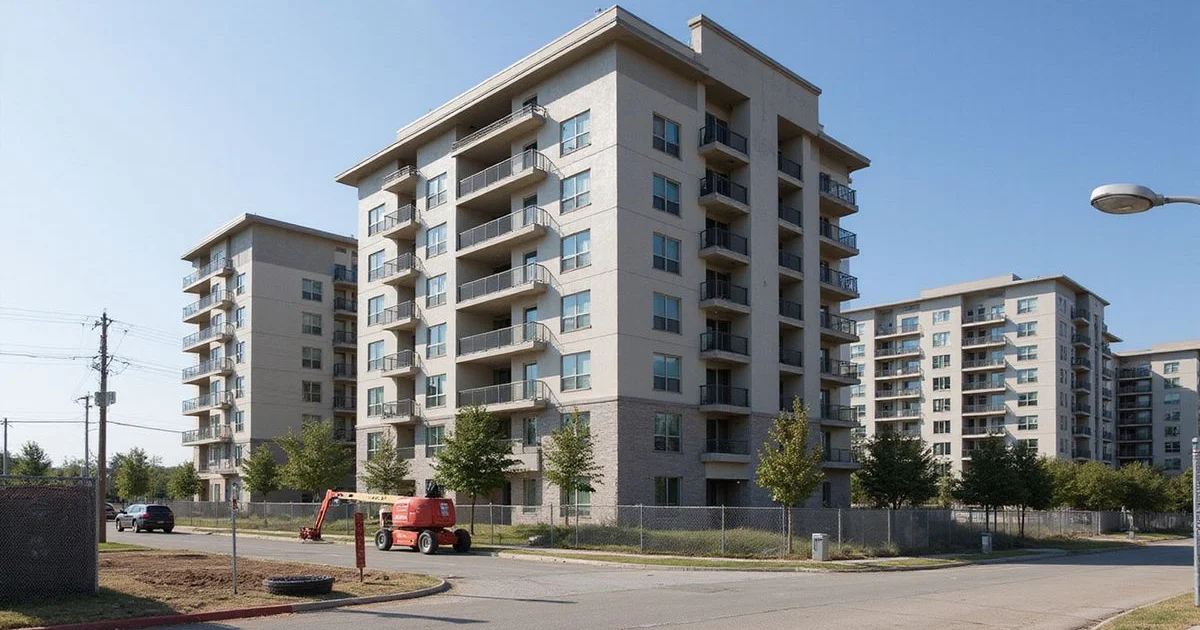
What is the apartment lease up timeline?
We know that understanding the apartment lease up timeline is essential when timing a move into a new build.
Market conditions in Houston are actively shifting as the massive supply wave unwinds. More than 25,000 units delivered in the year ending Q2 2024 per RealPage data, and roughly 13,319 units remained under construction in Q2 2026 according to Transwestern. This heavy inventory means property owners are competing fiercely for occupants.
Our team monitors these cycles because a building’s current stage dictates your unit choices, available specials, and exposure to active construction. This tracking data directly powers every stage chip displayed on our lease-up apartments page. Let’s look at the data to see how each phase changes your options.
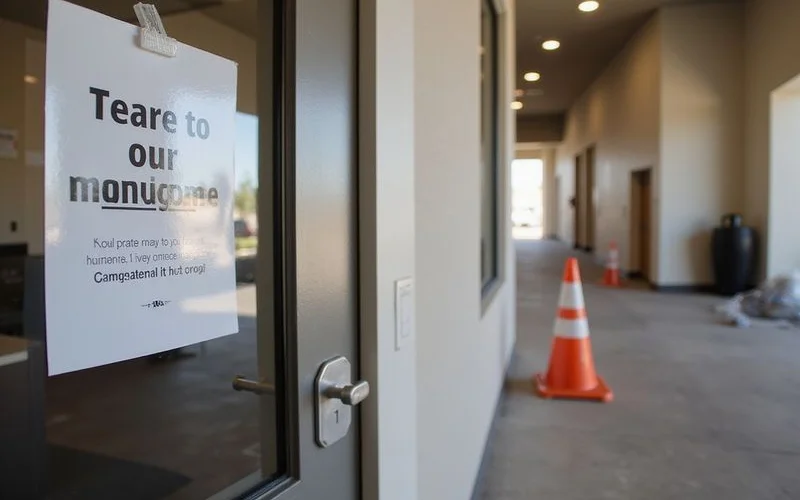
Stage 1: Pre-leasing
The building isn’t officially open for residents yet. A leasing office typically operates from a temporary trailer or a finished model unit. You can reserve a specific floor plan for a future first move-in date.
Our experience shows that developers rely heavily on this pre-leasing phase to secure construction loan drawdowns. Property managers often use software platforms like Yardi or RealPage to process these early applications and track momentum. You must read the fine print regarding construction delays.
- Specials: Property owners offer generous concessions here to build momentum before the official opening.
- Unit choice: Early applicants get the widest selection of floor plans and premium views.
- What to watch: Target dates are strictly estimates. Texas renters should secure move-in delay clauses in writing, as construction holdups can push timelines back by weeks.
Stage 2: Phased move-ins under a TCO
The first sections of the property finally open to the public. Many Houston buildings launch in phases under a temporary certificate of occupancy apartment protocol. This legal designation permits finished floors to take residents while other zones remain under active construction.
We always verify the exact terms of a property’s TCO before advising a move. Municipalities in Texas typically issue these temporary certificates for periods of 30 to 90 days. Inspectors ensure the occupied zones meet all life safety codes during this limited window.
- Specials: Concessions usually hit their deepest point as the building urgently tries to fill vacant units.
- Unit choice: Floor plan variety remains wide but is strictly limited to the legally finished phases.
- What to watch: Core amenities and dedicated parking structures often remain off-limits. Get written confirmation on target completion dates for the gym or pool.
Stage and build status are two different things
The stage indicates exactly where the building stands in its leasing cycle. The build status tells you what physical structures are actually finished. A development can be well into its lease-up phase and still have an incomplete parking garage or a closed amenity wing.
Stage 3: Lease-up
All or most construction phases are open, and the community is actively filling up. Ownership groups track their percent leased metrics daily to gauge performance. The main goal is apartment stabilization, which traditionally means hitting 90% or more occupancy.
Our latest data reviews show that average absorption rates for new multifamily projects typically run between 13 to 24 units per month. Yardi Matrix reported Houston’s total occupancy, including these lease-up properties, sat near 91.3% in late 2026. Achieving that final jump to a stabilized 94% requires consistent leasing velocity.
- Specials: Rent discounts remain common but start shrinking as the occupancy rate climbs.
- Unit choice: Available options narrow significantly for popular layouts like corner units or first-floor spaces.
- What to watch: Pay close attention to punch-list response times. You want to see how fast maintenance handles early work orders while managing ongoing site activity.
Stage 4: Stabilization and first renewals
The property finally reaches stabilized occupancy, and the management team sends out the first round of renewals. This period marks the first renewal cycle, introducing year-two pricing to the initial tenant base. Renewal offers calculate from the base rent rather than the discounted rate, making the price jump feel severe.
We noted that year-two pricing jumped about 18% based on the median special at the board (board math, Oct 25, 2026). While national renewal rent growth slowed to 1.7% by late 2026 according to Yardi Matrix, dropping a generous move-in concession creates a massive effective rent increase. Management software algorithms from companies like LRO or YieldStar will automatically push these baseline rates higher if the building remains full.
- Specials: Move-in discounts become much smaller or disappear entirely for new residents.
- Unit choice: Incoming renters must choose from whatever specific units happen to open up from non-renewals.
- What to watch: Compare your renewal offer against nearby buildings that are still in their early lease-up phases.
Our tracking system follows buildings strictly through their first 24 months before they leave the board.
This cutoff ensures you only see properties actively working through their initial market entry.
How stage shows up on our board
Every property card features a dedicated stage chip and a build-status chip. The stage metric also weighs 15 out of 100 total points in the Houston New Build Score. Earlier stages typically give prospective renters much more negotiating room on price.
We designed our guide on newly opened vs. a year in to help you compare these exact trade-offs. The opening soon page also lists upcoming buildings that are still in their pre-leasing phase. You can use these tools to map out a clear timeline for your next relocation.
How long is each stage?
Every single building moves at its own unique pace. A smaller boutique property in a highly desirable neighborhood can fill up in just a few months. A massive complex opening right next to several competing developments will take much longer to reach stabilization.
We never guess a timeline for any specific building because local market dynamics shift constantly. Industry data from RealPage indicates a typical 250-unit property might require 10 to 18 months to hit that 94% occupancy target. This variability explains why the board displays the stage chip, the build-status chip, and the percent leased when the community shares it.
What we can accurately share is how these different stages directly change your available choices. The earliest stages almost always provide better unit selection and much deeper financial specials. The later stages offer finished amenities and enough operational history to judge the management team.
What to ask at each stage
Asking the right questions based on a property’s leasing stage protects you from unexpected delays and hidden costs.
| Stage | Questions worth asking |
|---|---|
| Pre-leasing | What is the exact target date for the first move-in, and what specific penalty or cancellation clause applies if construction slips? |
| Phased move-ins | Which specific building phases operate under the current TCO, and what are the written completion dates for the main amenities? |
| Lease-up | What is the current percent leased, and what is the documented average response time for resident work orders? |
| First 24 months | How does management calculate base rates for renewal offers, and how do those figures compare to competing properties nearby? |
How do I use the timeline?
You should match the building’s current position on the apartment lease up timeline directly to your personal moving schedule. If your current lease ends in a few months, targeting a pre-leasing property or an early phase makes sense. Just make sure you keep a solid backup option lined up in case of construction delays.
Our team recommends a building in active lease-up with completed amenities if you need to relocate immediately. This approach guarantees you get access to the gym and pool from day one without waiting on contractors.
Send us your target move date and your current lease expiration. We will match you with buildings at the perfect stage, confirm exactly what is physically finished, and get your special terms in writing on the same day during business hours.