
What is the Texas flood disclosure?
You’re about to sign a lease in Texas, and one page in the packet asks about flooding. That’s the flood disclosure required by Texas Property Code §92.0135. It’s been required since Jan 1, 2022, and since Sept 1, 2025, both you and the landlord sign it. We ask for it for every building on our flood zone list before you apply.
It’s a short notice, but it gives you facts and, in one case, a right.
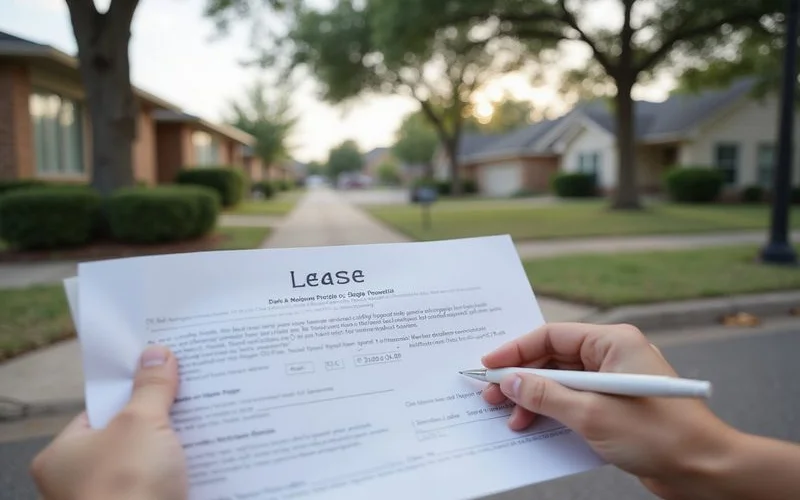
What does the notice have to say?
The notice answers two questions about the unit:
- Is it in the 100-year floodplain? That’s the 1% annual-chance flood area on FEMA’s maps.
- Has it flooded in the last five years? Meaning water damage from flooding, as the landlord knows it.
It has to be given in writing, at or before the time you sign the lease. The rule came from HB 531, effective Jan 1, 2022.
What changed in 2025?
SB 2349, effective Sept 1, 2025, requires both parties to sign the notice. That makes it harder for the notice to get lost in a lease packet. Leases shorter than 30 days are exempt.
| Rule | Effective | What it does |
|---|---|---|
| HB 531 (§92.0135) | Jan 1, 2022 | Requires the written floodplain and five-year flooding notice |
| SB 2349 | Sept 1, 2025 | Requires both parties to sign the notice |
What if the notice is missing?
If the landlord doesn’t give you the notice, and a flood later destroys 50% or more of your belongings’ value, you may end the lease within 30 days. That’s a lease right, not an insurance payout. It doesn’t replace your belongings.
We don’t give legal advice. We do make sure you have the notice before you sign, and we read it with you.
Read it as a fact sheet
A “yes” on the floodplain question doesn’t mean a building is a bad choice, and a “no” doesn’t mean it can’t flood. It’s one fact among several. We pair it with the FEMA zone and the generator answer.

How does it fit with the rest of the lease?
The flood notice is one of several pages to read before signing. The concession, fee and utility addenda change your bill. The flood notice changes what you know. Our guide on lease addenda red flags lists all seven pages worth a second look.
Flood coverage for your belongings is separate from all of this. Our guide on renters insurance and flooding explains why most renters policies exclude flood.
What should I do before signing?
- Ask for the notice before the signing appointment
- Check that both questions are answered
- Compare the floodplain answer with the FEMA zone for the address
- Sign it, keep a copy, and save it with your lease
What a filled-in notice looks like
The notice is short. It usually has two checkboxes or yes/no lines and a signature area:
| Question | Possible answers |
|---|---|
| Is the dwelling in a 100-year floodplain? | Yes, No, or the landlord is not aware |
| Has the dwelling flooded at least once in the last five years? | Yes, No, or the landlord is not aware |
| Signatures | Tenant and landlord, since Sept 1, 2025 |
“Not aware” is an allowed answer when the landlord doesn’t know. At a new building that’s only a year or two old, the five-year question may only cover the time since construction. Ask what the answer is based on.
Pair the notice with the FEMA record
The notice is the landlord’s statement. The FEMA record is the map. Comparing the two is useful. If the notice says “No” to the floodplain question and the FEMA zone is AE, ask why. A pending LOMR-F or a recent map change can explain it.
How do we help?
For every building on your shortlist, we ask for the §92.0135 notice and the five-year flooding answer, pull the FEMA record, and ask what the generator covers. Send us your move date and we’ll share the facts with dates, the same day during hours.